Field Records Under Fire: Building Documentation That Survives Regulatory and Legal Review
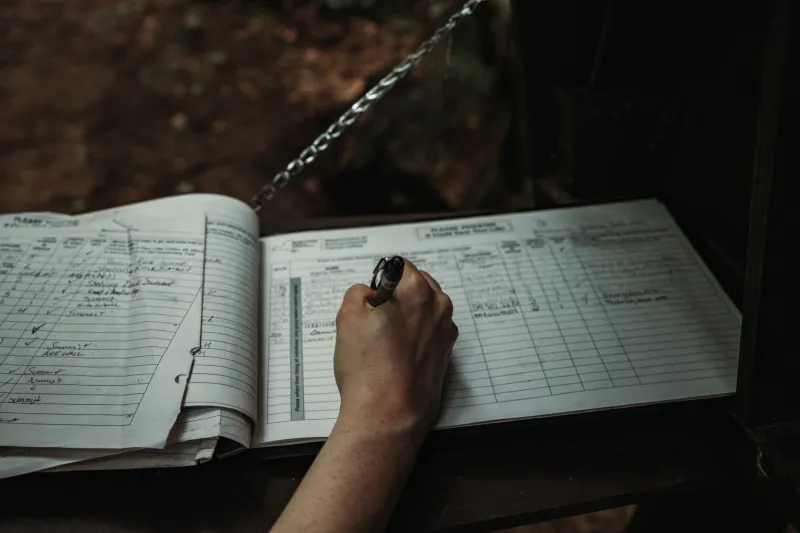
A field notebook is not a private memory aid. It is a professional record that may be read years later by a state inspector, an opposing expert, a client’s counsel, or a court. The same is true of photographs, instrument printouts, chain-of-custody forms, daily reports, and email threads. Environmental vendors in 2026 operate in an environment where records are requested quickly and scrutinized closely. Defensible documentation is therefore not an administrative afterthought; it is part of the technical service.
What Defensible Documentation Means in Practice
A defensible record is contemporaneous, complete, attributable, legible, and traceable. It shows what was observed, when, by whom, and under what conditions. It also shows what changed and why.
Regulators and litigants rarely expect perfection. They do expect consistency. A missing field duplicate may be explainable. An altered sample time with no explanation is not. A photograph with no date, location, or photographer is weak evidence. A photograph with a photo log entry and unaltered metadata is far stronger.
For vendors, the practical standard is simple: if a record cannot be explained by someone who was not there, it is not yet defensible.
The Anatomy of a Strong Field Record
Contemporaneous entries. Record observations at the time they are made, not at the end of the week. Include date, time, time zone where relevant, personnel, location, weather, equipment identification, and calibration information.
Photographs with a purpose. Establish a photo protocol: wide shot, mid-range shot, close-up, and scale reference where appropriate. Maintain a photo log. Avoid deleting images from the field device. If a photo is unusable, note why rather than removing it without a trace.
Corrections that preserve the original. Use a single line through an error, then initial and date the correction with a brief reason. Do not obscure the original entry. Do not rewrite a page. For electronic records, use an audit trail or a correction log rather than overwriting the original file.
Chain-of-custody discipline. Record relinquishing and receiving signatures, dates and times, seal numbers, and temperature control. A custody form that is complete but inconsistent with the daily report is a liability. Reconcile the two before the samples leave the site.
Deviation documentation. Field conditions change. If a sampling location is moved, a well is dry, or a duplicate is added, record the deviation, the reason, and who approved it. A deviation that is documented is a professional judgment. A deviation that is discovered later looks like an omission.
Ethical Pressure Points
The most difficult documentation issues rarely arrive as obvious requests to falsify a record. They arrive as requests to “clean up” a report, “tighten” a narrative, or “remove the duplicate photo that makes the area look bad.” A client may ask a vendor to change a sample time to match a laboratory receipt, soften language around an exceedance, or drop a field note that conflicts with a prior report.
Vendors need a clear internal distinction between editing for clarity and altering evidence. Rewriting a sentence for grammar is editorial. Changing a time, removing an observation, or deleting a photograph is a substantive alteration. If the original record exists elsewhere—in a notebook, a phone, an email, or a laboratory file—the altered version creates a consistency problem that can damage both the client and the vendor.
A practical response is to offer a correction memo or an addendum rather than a silent edit. The memo can explain the error, identify the correct information, and preserve the original record. If the client insists on removal, the vendor should escalate to project management and document the request. Professional codes and contractual obligations may vary, but the instinct to preserve the original record is nearly universal.
When the Regulator or Subpoena Arrives
A regulatory inspection or litigation hold is not the time to reconstruct the file. It is the time to produce it. Vendors should have a retention policy, a legal-hold procedure, and a clear understanding of who can release records. Drafts should not be destroyed once a request is reasonably anticipated. Inconsistent versions of the same report invite questions that no vendor wants to answer.
Practices That Protect the Project and the Professional
- Adopt a written field documentation standard and attach it to subcontracts.
- Train field staff on corrections, photo protocols, and chain-of-custody before mobilization.
- Require daily review of field notes while memories are fresh.
- Use a correction log for electronic records and a single-line correction method for paper.
- Preserve original photographs and metadata; do not rely on downscaled images in reports.
- Reconcile custody forms, daily reports, and laboratory receipts before demobilization.
- Educate clients at project kickoff about what can and cannot be changed in a final report.
- Retain records according to a written policy and suspend destruction when a dispute or investigation is anticipated.
A Culture of Evidence
Documentation quality is often treated as a compliance burden. It is better understood as a knowledge-transfer function. The field crew’s observations, judgments, and deviations are the institutional memory of the project. When those observations are recorded clearly and preserved honestly, they protect the client’s interests, the vendor’s reputation, and the professional’s ability to defend the work.
For EPVA members, the standard is not paperwork for its own sake. It is evidence that tells the truth about what happened in the field—and remains credible when someone else asks.