Standing Beside the Client at the Inspection Table: A Vendor's Role Before, During, and After an EPA Visit

An EPA or state inspection rarely begins with a knock at the door. It usually begins with a letter, a phone call, or an entry interview that puts a client's environmental program under a different kind of scrutiny. For service vendors, that moment tests something more durable than contract language: whether the client sees the vendor as a steady operational partner or as another variable to manage.
The Environmental Professionals & Vendors Association has long emphasized that vendor value is built in the unglamorous work between projects. Inspections expose whether that work was done. A vendor that prepares clients before the notice, stays within its lane during the visit, and follows through afterward can strengthen the relationship for years. A vendor that improvises can create new risk in a matter of hours.
Readiness Begins Before the Notice Arrives
Inspection readiness is not a binder assembled the week a regulator calls. It is a habit. Vendors that support industrial, municipal, and commercial clients should encourage a standing readiness review that maps the records a regulator is likely to request: permits and applications, monitoring reports, waste manifests, training records, spill response documentation, and prior inspection correspondence. The vendor does not own the client's compliance obligations, but it can help the client see where its records live, who maintains them, and whether the versions on file are current.
A useful readiness exercise is a tabletop walkthrough. The client's environmental manager, the vendor's project lead, and counsel where appropriate can rehearse the first thirty minutes of an inspection. Who greets the inspector? Where will the entry interview occur? Which documents can be produced immediately, and which require a controlled search? The goal is not to script answers but to remove avoidable confusion.
Drawing the Line Between Client Authority and Vendor Support
The most common vendor error during an inspection is confusing technical support with client authority. The client speaks for the facility. The client decides what positions to take. The vendor supplies records, explains field conditions, and helps locate supporting information. That distinction should be written into the project protocol before an inspection occurs, not negotiated in a hallway while an inspector waits.
A simple roles matrix can prevent friction. It might identify who serves as the client's primary liaison, who handles document production, who escorts inspectors in the field, and who takes notes. Vendors should also confirm confidentiality expectations and the client's preference for routing questions that touch on legal exposure. When a question falls outside the vendor's scope, the right response is a clear handoff, not an educated guess.
When the Document Request Lands
Document requests reward organizations that can produce accurate copies quickly. Vendors can help clients maintain a request log that records what was asked for, who is responsible, when it was produced, and what was withheld or redacted under the client's direction. That log becomes a useful reference if follow-up questions arrive weeks later.
Speed should never come at the expense of accuracy. A vendor that produces an outdated permit or an incomplete monitoring file creates more work than one that takes an extra hour to verify the record. Where clients rely on counsel for privilege or confidentiality decisions, the vendor should route the request accordingly and avoid independent redaction decisions. The association's procurement guidance makes the same point in another context: clear scopes and clear responsibilities reduce disputes. Inspections are simply a higher-pressure version of that principle.
Field Conduct During the Walkthrough
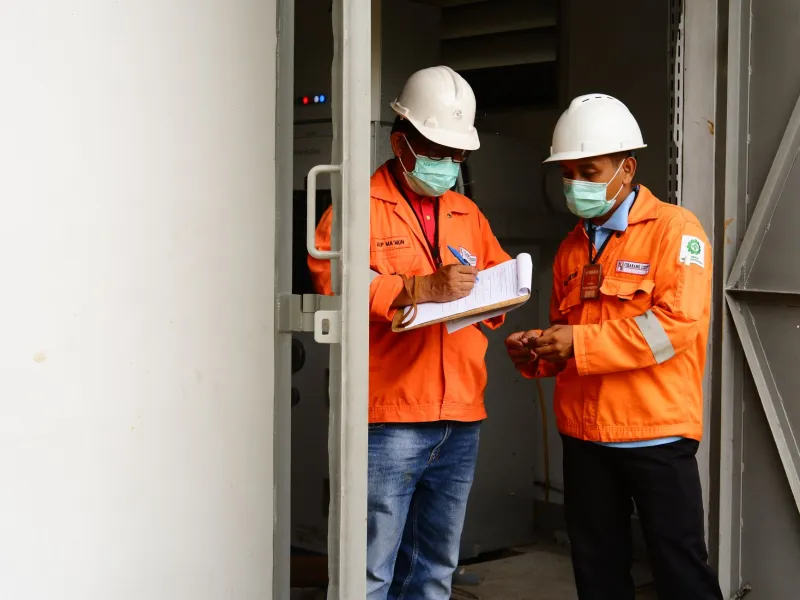
Field staff are often the most credible voices a client has during a walkthrough. They know where the outfall is, how the waste accumulation area is managed, and why a piece of equipment is temporarily out of service. That credibility depends on discipline. Staff should wear required PPE, follow site access rules, and avoid offhand opinions about compliance status. If an inspector asks a question that requires a legal or regulatory interpretation, the field lead should acknowledge the question and route it to the client's designated spokesperson.
Photography and note-taking deserve explicit guidance. Some clients welcome documentation of the inspector's observations; others prefer that all note-taking run through a single point of contact. Vendors should ask before the visit and follow the client's direction. The same applies to follow-up conversations in the parking lot or by phone. Informal exchanges can become part of the record, and they should be treated with the same care as formal interviews.
The Follow-Up That Preserves Trust
The inspection does not end when the inspector leaves. A debrief within twenty-four hours can capture observations, open questions, and promised follow-up items while memories are fresh. Vendors can help clients build a corrective action register that assigns owners and deadlines, then track progress without turning the exercise into a paperwork burden.
A short closeout memo is often worth the effort. It can summarize the vendor's role, the documents produced, the field conditions observed, and any items requiring client action. That memo protects the vendor and gives the client a clean record for its own files.
Most importantly, vendors should not disappear after the exit interview. Clients remember which partners stayed engaged through the uncomfortable part of the process. Inspections are not a product line, but they are a relationship test. Vendors that prepare clients calmly, respect the boundaries of their role, and follow through with disciplined documentation build trust that outlasts the project and often earns the next assignment.