The Shelf Life of Fieldwork: A 2026 Records Calendar for Environmental Firms
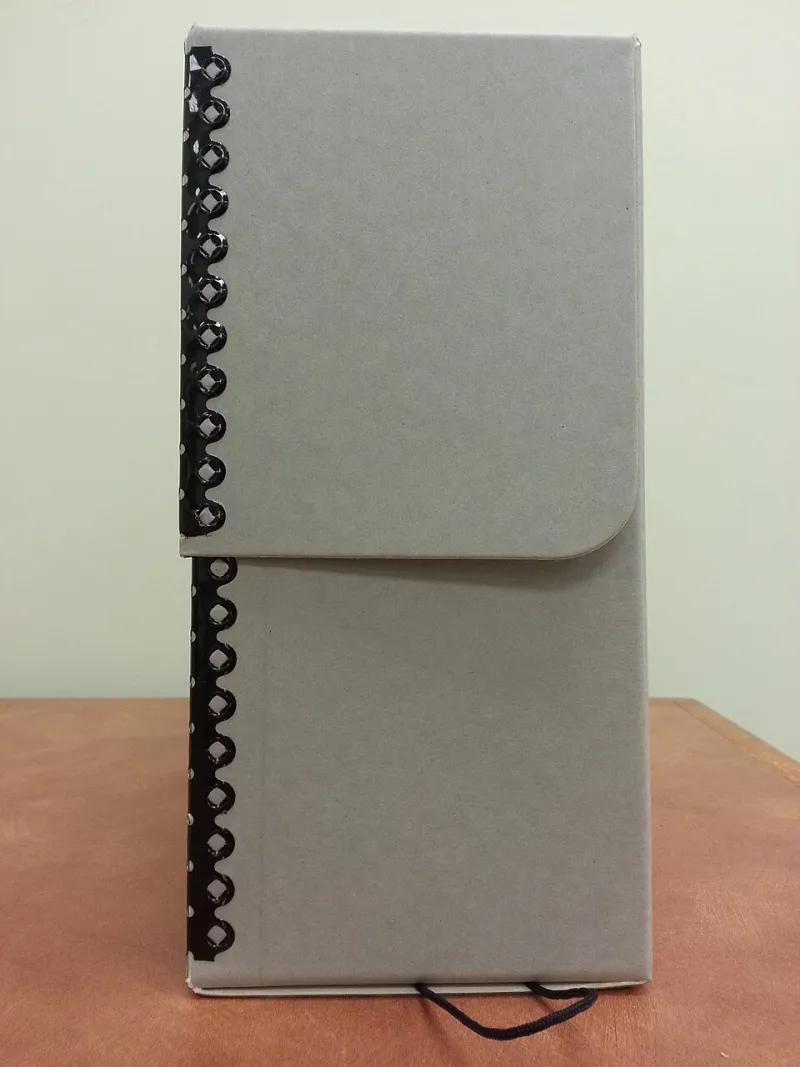
Photo: WilliamDenton, CC0, via Wikimedia Commons
Every environmental firm runs on paper and its digital equivalent. Daily field reports, boring logs, calibration sheets, chain-of-custody forms, lab deliverables, hazardous waste manifests, training rosters, subcontractor certificates, and years of email accumulate in trailers, file rooms, and shared drives. Most organizations treat this material as an unqualified asset: more evidence of good work, more proof of diligence.
The trouble is that a record is not only an asset. It is also a statement made at a particular moment, by a particular person, under a particular set of assumptions—and it remains available to be read years later by someone with a different question in mind. For members of the Environmental Professionals & Vendors Association, the practical question is not whether to keep records. It is how long each category should live, who decides when it dies, and how that decision is documented before anyone needs to defend it.
"Keep Everything" Is Also a Policy Decision
Many firms have no retention schedule at all, which is itself a schedule: permanent retention, applied indiscriminately. That default carries two costs that compound quietly.
The first is storage and retrieval. Physical records require space, climate control, and a chain-of-custody discipline of their own. Digital records require indexing; without it, a box in a warehouse and a folder named "misc_2019" are equally difficult to search.
The second cost is exposure. In a dispute, outdated drafts, superseded figures, and informal notes do not disappear because they are old. They become exhibits. A defensible program destroys routine records on a schedule, in the ordinary course of business, with a record of the destruction. A firm that never destroys anything has no such defense available.
Start With the Defaults, Then Verify Them
Federal baselines give members a starting point, not a complete answer. Three anchors are worth knowing:
- Grant and contract funding. Under 2 CFR 200.334, recipients and subrecipients generally retain financial records, supporting documents, statistical records, and other records pertinent to an award for three years from the date of submission of the final expenditure report, with exceptions that extend the period.
- Employee exposure records. Under OSHA's access-to-employee-exposure-and-medical-records standard (29 CFR 1910.1020), exposure records are generally kept for 30 years, and medical records for the duration of employment plus 30 years.
- Tax and employment records. IRS and Department of Labor requirements set their own clocks, and several states add longer periods for wage, workers' compensation, and hazardous waste documentation.
A retention calendar built only on these baselines will be incomplete. State environmental agencies, municipal contracts, and laboratory accreditation bodies each impose their own expectations. The first step for any member firm is a written inventory of the obligations that actually apply to its work—not an assumption that the federal floor is the whole floor.
Where the Calendar Bends: Contracts and Holds
Two forces routinely displace a default schedule, and both should be built into the calendar rather than handled as exceptions.
Contract terms. Owners, general contractors, and prime consultants frequently extend retention well beyond regulatory minimums—sometimes for the life of a facility, sometimes for a stated period after final payment. Indemnification clauses, audit rights, warranty periods, and records-access provisions can all lengthen the clock. When a firm signs a subcontract, it should update its calendar at signature, not at closeout.
Litigation holds. When litigation is reasonably anticipated, the obligation to preserve evidence overrides any destruction schedule. This is not a suggestion; it is the point at which a routine practice becomes spoliation if ignored. The mechanics are unglamorous but essential: a named individual issues the hold in writing, identifies the custodians and systems covered, suspends destruction for those categories, and confirms receipt. When the matter resolves, the hold is lifted in writing and the calendar resumes.
A record-keeping policy without a hold procedure is a policy that will be tested at the worst possible moment.
A Record-Type Calendar
The following categories reflect what most member firms actually generate. Each entry pairs a record with a trigger event—the moment the clock starts—because a retention period without a trigger is unenforceable.
- Daily field reports and field notebooks. Retain for the project record; trigger is project closeout. Notebooks tied to litigation or enforcement matters follow the hold, not the calendar.
- Chain-of-custody forms and lab deliverables. Retain with the analytical record for the period required by the governing program or contract, commonly five to ten years and longer where state rules or permits specify.
- Permit applications, issued permits, and compliance monitoring reports. Retain for the life of the permit plus the post-closure period specified in the permit or regulation.
- Training rosters, certifications, and refresher records. Retain for the duration of employment plus the period required by the relevant standard; hazardous waste operations and emergency response training records carry their own requirements.
- Project correspondence and email. Retain the substantive record—decisions, scope changes, directives, approvals—and treat transitory scheduling traffic separately and briefly.
- Subcontractor prequalification files. Retain for the current engagement plus the period during which the vendor could be named in a claim, coordinated with insurance renewal cycles.
- Incident, injury, and near-miss reports. Retain per OSHA and state workers' compensation requirements, and hold immediately upon notice of a claim.
The Quarterly Review as a Standing Habit
A calendar that is written once and filed is a document, not a program. Members who manage this well tend to run a short review each quarter:
- Reconcile the hold register. Confirm every active hold, its custodians, and its scope against the destruction queue.
- Clear the closed-project shelf. Identify projects past their retention trigger and confirm that no contract term, permit condition, or hold extends them.
- Execute destruction with documentation. Use a vendor with a certificate of destruction, log what was destroyed, by whom, and under which policy provision.
- Update for new obligations. New contracts, new permits, and new state rules enter the calendar in the quarter they arrive.
The review need not take long. It needs to happen on a schedule so that destruction is demonstrably routine.
Knowledge, Not Just Liability
Retention decisions are usually framed as risk management, and they are. But there is a knowledge dimension that matters just as much to an association of practitioners. Field logs and closeout reports contain the judgment that made a project work—the unexpected soil condition, the contingency that solved it, the regulator's preference discovered mid-review. Firms planning for retirements and crew turnover should decide deliberately which records carry transferable knowledge and route those into briefings, case libraries, or mentoring sessions before the retention clock runs out.
That is the balance the calendar is meant to strike: keep what the firm is obligated to keep, keep what the next crew will need, and destroy the rest on a documented schedule, before a courtroom or a storage invoice makes the decision instead.