The Envelope Was Never the Finish Line: Building a Bid Debrief Discipline for 2027
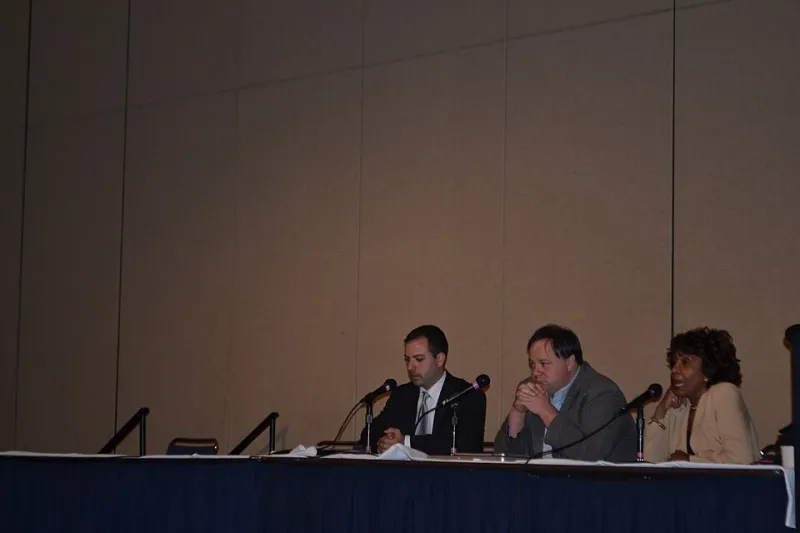
Photo: Adriel Hampton from Dublin, USA, CC BY 2.0, via Wikimedia Commons
The Notice Is a Threshold, Not a Verdict
In environmental services procurement, the award notification arrives with unusual finality. A client selects a firm, a regret letter is issued, and project teams move on to the next pursuit. The file is closed. The lessons, however, are still fresh—and briefly available. The weeks immediately after notification are when clients can often explain their scoring, when internal teams still remember the assumptions they made, and when the gap between the submitted proposal and the winning approach is easiest to identify.
For members of the Environmental Professionals & Vendors Association, the practical question is not whether to debrief. It is how to make debriefing a routine part of procurement management rather than an occasional exercise undertaken only after a painful loss. A structured post-award intelligence loop serves two purposes: it improves the next proposal, and it strengthens the firm's understanding of how clients define value in a competitive market.
Two Tracks, One Discipline
A useful debrief program separates losses from wins, not because losses matter more, but because the questions differ.
After a loss, the objective is diagnostic. The vendor should seek a conversation with the procuring entity where permitted by the solicitation rules and public-records framework. In many US state and local processes, a debriefing is available on request; in federal contracting, debriefings may be governed by the Federal Acquisition Regulation. The vendor should ask about evaluation criteria, relative strengths and weaknesses, and any clarifying points the client is willing to share. The tone should be professional and non-adversarial. The goal is not to relitigate the award. It is to understand how the proposal was read.
After a win, the objective is preservative. The winning team should capture why the proposal succeeded before memory softens. Which scope assumptions proved persuasive? Which past-performance examples carried weight? Which technical approach or staffing model differentiated the bid? A short internal session within ten business days can preserve details that would otherwise disappear into the project file. That record becomes evidence for the next pursuit.
Questions That Produce Usable Information
A debrief is only as good as the questions asked. Generic prompts such as “How did we do?” tend to produce generic answers. More useful questions are specific to the procurement and the client's decision process.
For a loss, consider asking:
- Which evaluation factors carried the most weight in the final ranking?
- Were there specific weaknesses or deficiencies noted in the technical or management approach?
- Did the proposed price or level of effort fall outside the competitive range, and was that a decisive factor?
- Were there presentation or interview elements that influenced the outcome?
- What information would have made the proposal easier to evaluate?
For a win, consider documenting:
- Which elements of the technical approach were cited as strengths?
- Which teaming arrangements or key personnel credentials mattered most?
- How did the client perceive the proposed schedule, safety record, or regulatory experience?
- What assumptions about site conditions, permitting, or agency coordination proved realistic?
- Which proposal sections or graphics were most effective in communicating the approach?
These questions are not about assigning blame or celebrating a victory. They are about building a factual record that can be used across pursuits.
Documenting Without Creating Busywork
The debrief loses value if it produces a memo that no one reads. A lightweight documentation standard is more likely to be sustained. One practical approach is a one-page debrief record attached to the opportunity file and indexed by client, service line, procurement type, and outcome. The record should include the date, participants, key client comments, internal observations, and a short list of actions.
Actions should be specific and assigned. For example: revise the site-investigation assumptions in the proposal library; add a new past-performance summary for a similar remediation project; adjust the go/no-go threshold for pursuits requiring an on-site interview; or update the cost narrative to better explain mobilization and demobilization. Each action should have an owner and a review date.
The record should also distinguish between client feedback and internal inference. A client may say that schedule was a concern; the internal team may believe the concern was really about staffing continuity. Both observations can be useful, but they should not be blended into a single conclusion. Clear labeling keeps the record honest and makes it more useful during the next pursuit.
Feeding the Loop Back into the Pipeline
The real test of a debrief program is whether it changes behavior. Three areas deserve regular review.
First, proposal libraries. A library that is never pruned becomes an archive of outdated language. Debrief findings should trigger targeted revisions: new project descriptions, refined resumes, updated regulatory-experience summaries, and clearer organizational charts. The goal is not a complete rewrite after every award. It is a steady accumulation of verified, reusable content.
Second, scope assumptions. Environmental projects are especially sensitive to assumptions about site conditions, permitting timelines, waste characterization, and agency review. Debrief feedback can reveal where assumptions were too optimistic or too conservative. Those lessons should be folded into estimating templates and scope narratives before the next bid cycle.
Third, go/no-go criteria. Not every pursuit deserves a proposal. A debrief loop helps a firm recognize patterns: clients that consistently emphasize local presence, procurements that reward unusually low prices, or opportunities that require credentials the firm cannot substantiate. Over time, these patterns sharpen the decision about where to invest proposal effort.
A Calendar for the 2026–2027 Cycle
A simple calendar keeps the practice from drifting. Within five business days of an award or loss, the pursuit lead should request a debrief or schedule an internal review. Within ten business days, the one-page record should be completed. Within thirty days, assigned actions should be entered into the proposal library or estimating templates. Once a quarter, the procurement team should review debrief records for recurring themes and report them to leadership.
This cadence is modest, but it creates a feedback loop that survives the pressure of active project work. It also gives the firm a defensible basis for changing its approach—not because a single loss felt disappointing, but because a pattern of client feedback supports a different course.
Keeping the Practice Professional
Debriefing is a client-facing activity and should be conducted with the same care as any other client interaction. Vendors should respect procurement rules, avoid requests for information that cannot be shared, and maintain a constructive tone. A debrief is not an appeal. It is a conversation about how a proposal was understood.
For environmental service providers, the stakes are practical. The 2027 season will reward firms that can demonstrate regulatory fluency, field reliability, and clear communication. The intelligence gathered after each 2026 award decision is one of the most direct ways to strengthen those capabilities. The envelope may close a procurement, but it should open a learning cycle.