The 2 A.M. Test: Building Dependable Peer Response Alliances for Environmental Emergencies
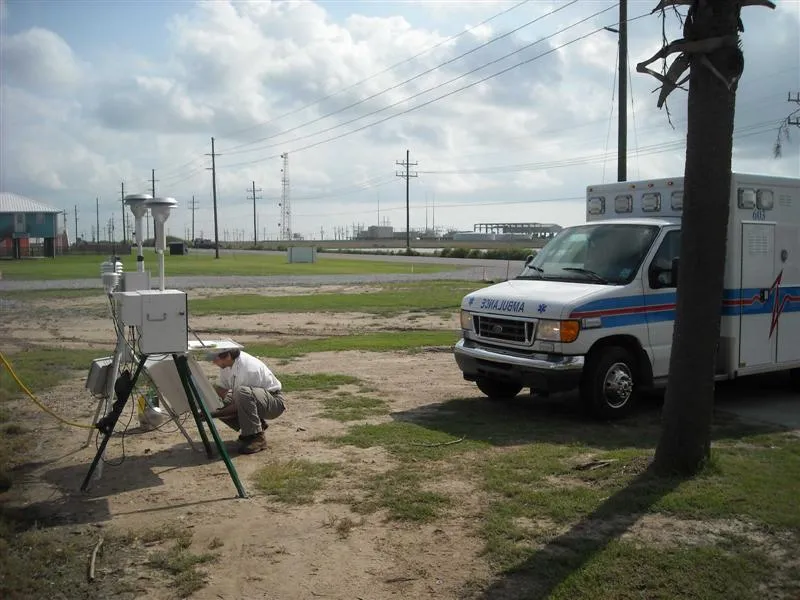
Photo: USEPA Environmental-Protection-Agency, Public domain, via Wikimedia Commons
The difference between a favor and a framework
Most environmental service firms have a version of the same story: a client calls after hours, a storm overwhelms a site, or a spill response outruns the available crew. Someone remembers a peer who might help. A few phone calls follow. Equipment arrives, but the paperwork does not. Billing terms are guessed at, insurance certificates are exchanged days later, and decision rights remain murky until the work is already underway.
That informal approach can work once. It is not a network. For environmental vendors serving industrial, municipal, and commercial clients in 2026, a peer response alliance should be a documented operating relationship, not a list of names on a phone. The test is not whether colleagues are willing to take a call. The test is whether the alliance can function at 2 a.m., under regulatory scrutiny, with a client watching and a clock running.
Start with the work, not the roster
A useful alliance begins with a capability map. Vendors should identify the emergency scenarios their clients are most likely to face: spill containment and recovery, stormwater bypass, air monitoring, waste characterization, temporary storage, laboratory courier support, equipment rental, and field labor surge. For each scenario, the firm should name the peers it would trust to perform the work, not merely the peers it knows socially.
The map should account for geography and depth. One qualified peer in a market is a contact. Two are a network. Members should consider whether a potential partner can reach a site within a realistic window, whether it holds the right equipment, and whether its field staff can work within the client's safety and compliance systems. The goal is not to build an exclusive club. It is to create a small, verified set of relationships that can be activated without starting from zero.
Pre-qualification that holds up
Reciprocal response agreements need a pre-qualification file that is lighter than a full procurement dossier but stronger than a business card. At a minimum, participating firms should exchange current licenses and registrations, safety performance information, key personnel contacts, equipment inventories, laboratory accreditations where relevant, transportation identifiers, and evidence of relevant experience.
Insurance deserves particular attention. The file should include certificates of insurance for commercial general liability, auto liability, workers' compensation, and pollution liability where applicable. Members should agree in advance on additional insured status, waiver of subrogation, and notice requirements. A certificate produced after mobilization is a compliance gap, not a formality. The same principle applies to safety records: a peer that cannot demonstrate a compatible safety culture is not a dependable emergency partner, regardless of its equipment list.
Activation triggers and decision rights
Many alliances fail because no one defines what activation means. A written agreement should identify the events that can trigger a request: a client emergency call, a regulatory directive, a severe weather event, or an internal capacity threshold such as committing more than a specified percentage of field staff to a single incident. It should also name the individual or role at each firm authorized to request or accept support.
Decision rights should extend beyond activation. Who can commit equipment? Who approves overtime? Who can stand down the response? Who speaks to the client when multiple firms are on site? These questions are easier to resolve in a conference room than in a parking lot at midnight. A simple decision matrix, reviewed annually, can prevent dueling instructions and duplicated effort.
Billing, insurance, and liability boundaries
Emergency work is not the place for handshake pricing. A workable agreement includes a rate schedule by labor category and equipment type, provisions for mobilization and demobilization, overtime and holiday rates, per diem, disposal pass-through costs, and documentation requirements. It should also state payment terms and the process for change orders if the scope expands beyond the initial request.
Liability boundaries belong in the same conversation. Members should clarify indemnification, limits of liability, and responsibility for regulatory notifications and waste profiling. These provisions are not signs of distrust. They are the terms that allow trusted peers to respond quickly without later disputes over who agreed to what. Legal counsel should review the template before it is used.
A communication protocol that survives pressure
At 2 a.m., a group text is not a protocol. The agreement should designate primary and secondary contacts, a single intake number for activation, and a shared incident log format. It should specify the cadence for status updates, the method for sharing site safety plans and chain-of-custody records, and the expectations for client communication. Members should also agree on how sensitive information will be handled and how after-action findings will be distributed.
The protocol should be tested, not merely filed. A quarterly check-in can confirm that contacts are current and that the activation number still reaches a person. Annual training can walk new staff through the process. The alliance is only as strong as the least-prepared person who might answer the phone.
A tabletop exercise members can run together
EPVA members can use a 90-minute tabletop exercise to test a peer response alliance without waiting for an actual incident. The scenario should be plausible and specific: a 500-gallon release at a client facility near a waterway, reported at 2 a.m., with containment expected to last two days. Each participating firm assigns a coordinator, an operations lead, a finance representative, and a safety or compliance representative.
The exercise should include three injects. First, the client requests immediate air monitoring beyond the original scope. Second, a key piece of equipment fails and a replacement must come from a third party. Third, the regulator arrives on site and asks for documentation. Participants then walk through activation, billing, insurance notification, and client communication. The after-action review should identify gaps in coverage, equipment, decision-making, and documentation, with an owner and due date for each corrective action.
Keep the network current
A peer response alliance is an operating document, not a one-time memorandum. Members should refresh pre-qualification files annually, update rate schedules, verify insurance certificates, and re-test communications each quarter. They should also review after-action findings from real events and exercises, not only the ones that went well.
The 2 a.m. call will still be difficult. A spill, storm, or sudden mobilization rarely arrives with clean information or convenient timing. But an alliance built on verified capability, clear triggers, agreed billing terms, and tested communication can turn a frantic scramble into a controlled response. That is the difference between knowing a peer and being ready to work with one.