When the Forecast Wins: A Member Framework for Productive Weather Stand-downs
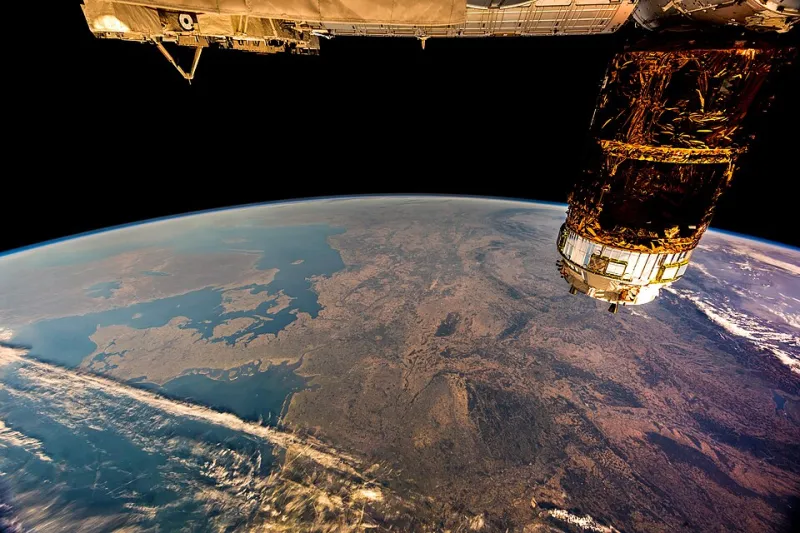
Photo: Alexander Gerst, CC BY-SA 2.0, via Wikimedia Commons
In 2026, weather volatility is no longer an occasional scheduling inconvenience for environmental field firms. It is a recurring operating condition. A rain day, a heat hold, a wind shutdown, or a road closure can erase a mobilization window that took weeks to arrange. The damage is greatest when the decision is informal, the client hears about it late, and the crew spends the day waiting for instructions that never come.
EPVA members have learned that a weather stand-down is not simply lost time. It is a decision point. Handled well, it protects workers, preserves client trust, and converts idle hours into training, maintenance, and documentation that would otherwise compete with billable work. Handled poorly, it becomes a schedule slip that follows the project for months.
Name the decision owner before the first drop
The most common failure in weather response is not a missed forecast. It is a missed assignment of authority. Everyone watches the radar; no one owns the call.
A workable 2026 model assigns four roles. The field supervisor owns the immediate stop-work decision at the site. The safety lead maintains the threshold table and interprets site-specific hazards. The project manager owns client communication and recovery planning. Any crew member retains stop-work authority without penalty. That last point is not decorative. It is the backstop when conditions change faster than the chain of command.
Default thresholds should be written into the project health and safety plan and reviewed at mobilization. They are starting points, not substitutes for site judgment or stricter client requirements.
| Condition | Default action | Confirming role |
|---|---|---|
| Lightning detected within 10 miles or thunder heard | Stop outdoor work and shelter in a vehicle or building | Field supervisor |
| Sustained winds above 30 mph or gusts above 40 mph | Suspend work at height, near unstable stockpiles, or with loose containment | Safety lead |
| Heat index at or above 103°F | Move to shaded or indoor work; increase rest cycles | Field supervisor with safety lead |
| Wind chill at or below -10°F | Suspend nonessential outdoor tasks; reassess PPE and exposure | Safety lead |
| Visibility below one-quarter mile or active road closure | Delay mobilization; do not convoy | Project manager and field supervisor |
| Flash flood warning or severe thunderstorm warning | Demobilize from low-lying access routes and exposed sites | Field supervisor |
Use three levels, not one
A binary choice between work and no work creates unnecessary disruption. Members report better outcomes with three levels. A delay covers a short pause, typically under two hours, with the crew staged safely and the client notified. A hold covers a longer pause, generally two to eight hours, with indoor readiness tasks assigned. A demobilization applies when conditions or access make a same-day return unlikely. Each level should have a preapproved communication path and a named person responsible for the next update.
Keep client messages short, factual, and timed
The client does not need a meteorological essay. The client needs to know what changed, what is safe, and when the next update will arrive. Three templates cover most situations.
Initial notice:
Subject: Weather stand-down — [Project] — [Date]
Due to [condition] at [time], field operations at [location] are paused under our weather safety protocol. The crew is secure and available for indoor readiness tasks. Next update at [time]. No action is requested unless site conditions differ from our report.
Resumption notice:
Subject: Field resumption — [Project] — [Date]
Conditions have improved and the crew is remobilizing at [time]. We will confirm access and safety at the site before restarting [specific task]. Any schedule adjustment will follow by [time].
Schedule impact notice:
Subject: Schedule impact — [Project] — [Date]
The weather hold has moved [task] by [duration]. We have protected [milestone] by [specific recovery action]. A revised field sequence is attached for review.
Convert the hold into readiness
An unassigned crew will find ways to fill time. A directed crew will build capacity. The difference is a hold captain — usually the field supervisor or a senior technician — who assigns 45-minute blocks and records completion.
Indoor training options include a toolbox talk on heat illness or cold stress, a chain-of-custody refresher, a mock inspection with sample documents, calibration practice, equipment decontamination procedures, and cross-training on a second crew role. Short sessions work better than half-day lectures. The goal is retention, not attendance.
Equipment maintenance options include pump and generator checks, filter replacement, calibration verification, vehicle inspections, PPE inventory, and staging consumables for the next mobilization. Administrative options include closeout file review, vendor document updates, permit renewal tracking, and preparation for the next client call. These tasks should be logged in a hold ledger so the association can show the client what was accomplished rather than simply what was postponed.
The post-hold recovery checklist
Before the hold ends, the project manager and field supervisor should complete a short checklist:
- Confirm the forecast and site access conditions with a second source.
- Inspect roads, staging areas, and containment for storm damage.
- Reassign crew and equipment to the revised sequence.
- Send the client the resumption or schedule impact notice.
- Confirm laboratory pickups, permits, and utility locates are still valid.
- Verify equipment calibration and fuel levels before mobilization.
- Hold a ten-minute debrief on what triggered the hold and what should change next time.
- Record hold hours, completed readiness tasks, and any schedule variance.
The next morning, the field supervisor should walk the site before the crew begins. Weather holds often reveal access problems, undermined staging areas, or damaged erosion controls that were not visible from the truck.
Measure the recovery, not just the rain
Members should review hold data quarterly: hold hours by cause, percentage converted to readiness tasks, schedule variance, and safety incidents during weather events. A firm that converts most hold hours into documented training and maintenance is not merely enduring bad weather. It is using the forecast as a workforce development tool.
EPVA will continue to collect member examples of weather protocols, client notices, and recovery checklists. The strongest submissions will be shared through the association’s knowledge-transfer resources so that a lost field day becomes a scheduled gain for the next crew.